

A correctly measured foundation can still leave you short if you treat cement as the whole concrete mix. If you’re working out how to calculate cement needed, start with the volume of concrete your foundation or slab requires, then use the specified mix to estimate the cement portion.
Concrete includes cement, sand, stone and water, so the number of cement bags depends on more than the length, width and depth of the pour. The intended use and mix specification matter too. A rough estimate can disrupt a pour or leave you with unused materials.
This guide explains how to measure in metres, calculate concrete volume in cubic metres and estimate cement using the selected mix and the product yield. You’ll also learn what to check before ordering, including dimensions, units and site conditions. Once your quantities are clear, you can plan a building-material order through Bobras Hardware, with branches in Vondwe and Makonde and job-site delivery across Thohoyandou and surrounding areas.
Key Takeaways
- Learn how to calculate cement needed using the specified mix and product yield, rather than treating the full concrete volume as cement.
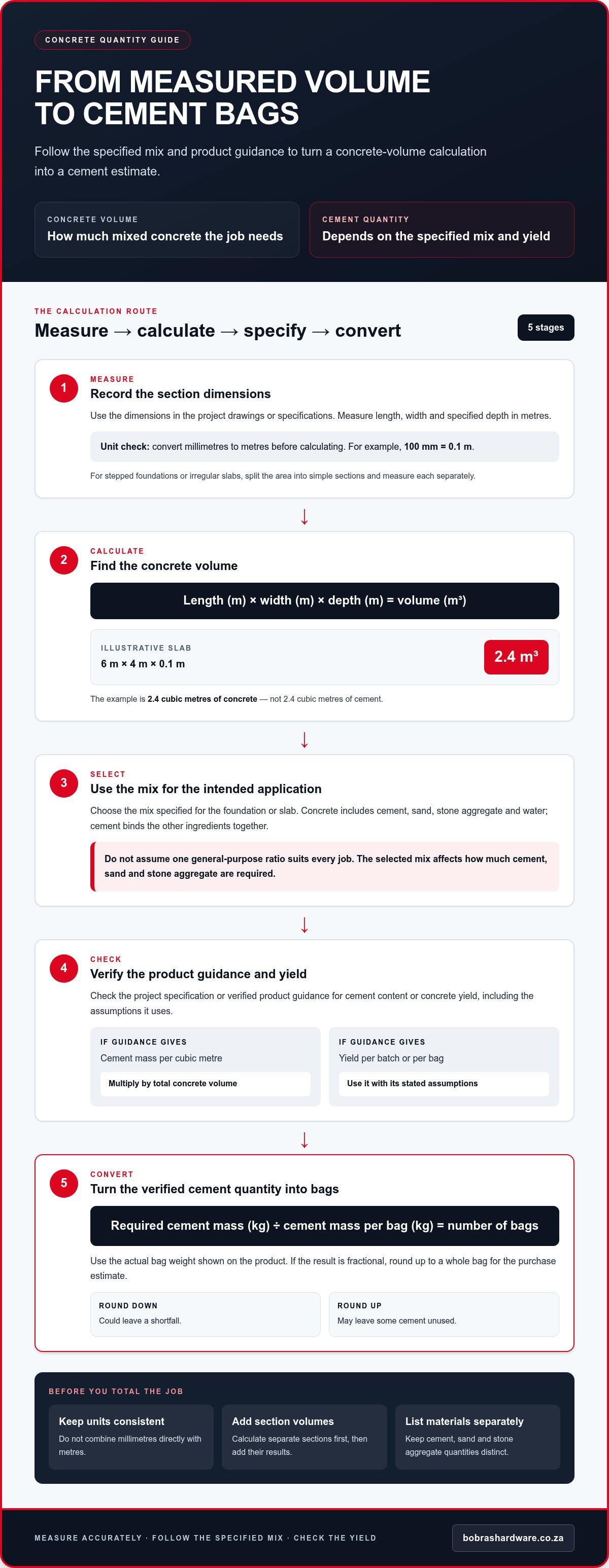
- Follow a clear measure, calculate, specify and convert sequence to build your bag estimate.
- Account for the dimensions and shape of each section, using project drawings or specifications for the required measurements.
- Check units and section totals, then list cement, sand and stone aggregate separately to help catch quantity errors.
- Turn checked quantities into a building-material order plan, with Bobras Hardware branches in Vondwe and Makonde and job-site delivery across Thohoyandou and surrounding areas.
How to Calculate Cement Needed: Start with the Concrete Volume
Cement is one ingredient in concrete, alongside sand, stone aggregate and water. Concrete is the mixed material placed in a foundation or slab; cement binds the other ingredients together. The What is concrete? overview explains its composition and how it is made.
Concrete volume tells you how much mixed concrete the job needs; the selected mix determines how much cement goes into that volume. These are related but different quantities. To work out how to calculate cement needed, first calculate the concrete volume in cubic metres. Then use the mix specification or product guidance to convert that volume into a cement quantity.
What measurements do you need for a foundation or slab?
Measure the length and width of the area to be filled, then record the specified concrete depth. Use metres for all three measurements. If the depth is in millimetres, divide it by 1,000 before calculating: for example, 100 mm becomes 0.1 m. Use the dimensions in the project drawings or specifications, rather than a generic example.
For a stepped foundation or irregular slab, divide the area into simple sections, such as rectangles. Measure and calculate each section separately. This keeps the figures clear and helps prevent a dimension from being counted twice.
How do you calculate concrete volume in cubic metres?
For a rectangular slab or section, use:
Length (m) × width (m) × depth (m) = concrete volume (m³)
For example, an illustrative rectangular slab measuring 6 m long, 4 m wide and 0.1 m deep has a volume of:
6 m × 4 m × 0.1 m = 2.4 m³
This is 2.4 cubic metres of concrete, not 2.4 cubic metres of cement. Cement content depends on the specified mix and guidance for the materials being used. Don’t assume a general-purpose ratio is suitable for every foundation or slab. Follow the mix specification for the intended application.
For multiple sections, calculate each volume separately, then add the results. Record each section’s dimensions in metres and its volume in cubic metres before totalling. If a section has a different shape or depth, keep its calculation separate rather than applying one average measurement to the whole job. Check the units before adding figures: combining a measurement in millimetres directly with one in metres will give the wrong result.
Once you have the total concrete volume, you have the starting figure for converting the specified mix into cement bags using the relevant product yield.
How to Convert Foundation and Slab Volume into Cement Bags
Once you have the concrete volume, use the mix specified for the job. Cement bag quantities depend on that mix and the yield stated for the materials. There’s no single bag quantity for every foundation or slab: dimensions, application and mix requirements all affect the estimate.
Work through the calculation in order:
- Measure the section using the dimensions in the project drawings or specifications.
- Calculate its concrete volume in cubic metres.
- Select the specified mix for the intended application.
- Check the product guidance for cement content or concrete yield, including the assumptions it uses.
- Convert the required cement quantity into bags using the verified bag mass or matching product yield.
Which mix information should you use in the calculation?
Use the project specification or verified product guidance for the concrete application. Mix proportions change how much cement, sand and stone aggregate are required. A ratio from a general example may not suit your foundation or slab, so don’t use it instead of the specified mix. The cement industry standards resource offers broader cement industry information, but the mix guidance for your project should determine the quantities.
If the guidance gives cement mass per cubic metre, multiply that figure by the total concrete volume. If it gives a stated yield per batch or per bag, use that yield as directed. Keep the units consistent throughout the calculation.
How do you turn cement quantity into bags?
When you have the required cement mass, divide it by the verified mass of one bag:
Required cement mass (kg) ÷ cement mass per bag (kg) = number of bags
For example, if your calculation gives a cement mass of M kilograms and the bag contains B kilograms, the estimate is M ÷ B bags. Use the actual bag weight shown on the product, as bag masses can differ.
If product guidance gives the amount of concrete yielded by a bag or batch, use that figure only with its stated mix and preparation assumptions. Check the product information for the bag mass or yield that matches your materials before finalising the estimate.
Round a fractional result up to a whole bag for the purchase estimate. Rounding down could leave a shortfall; rounding up may leave some cement unused. Before arranging supply, keep your verified cement, sand and aggregate quantities separate in the materials list. Use that list to plan a building-material order through Bobras Hardware building materials.
Foundation vs Slab: Which Measurements Change Your Cement Estimate?
The measurement method depends on the shape of the concrete section. A slab is often broad and shallow, whilst a foundation may include long trenches, stepped sections or separate pads. These differences affect the concrete volume and, in turn, the cement estimate. Use the dimensions in the project drawings or specifications, not a generic online example or a depth taken from an overseas guide.
| Input | Slab | Foundation |
|---|---|---|
| Length | Measure each slab area or distinct section. | Measure each trench run or separate pad. |
| Width | Use the specified width, noting recesses or changes in outline. | Record the specified trench or pad width. |
| Depth | Use the specified thickness, allowing for any change in level. | Use the specified depth for each trench or stepped section. |
| Shape | Separate irregular outlines into simple measurable sections. | Separate trenches, steps and pads where their dimensions differ. |
How do you estimate cement for a slab?
Calculate the concrete volume for each slab section using its length, width and specified depth. Add the section volumes to get the slab total. A change in thickness, a slope or a recess can alter the concrete quantity, so identify these points rather than treating the whole area as one uniform block. Use the resulting volume with the specified mix when working out how to calculate cement needed.
For an irregular slab, divide the plan into simple shapes, calculate each part separately and total the results. Keep each section’s measurements and units together so you can review the calculation easily.
How do foundation trenches affect the estimate?
For trenches, record the length, width and specified depth. If the dimensions change along a run, split it into sections and calculate each one separately. Do the same for stepped foundations and individual pads. One average measurement can hide wider or deeper areas and lead to an inaccurate volume.
Loose or uneven excavations can make site measurements less exact. Note where the trench profile varies and use the project dimensions as your reference instead of assuming the ground is uniform. The ACI concrete standards provide concrete-related technical resources, but overseas references should not replace the dimensions or mix requirements stated for your project.
How to Check Your Cement Estimate Before Ordering
A final review can catch small errors before they become a shortfall or an excess order. Check measurements against the project drawings, confirm that each section has been included once, and recalculate dimensions converted from millimetres to metres. Entering a depth in millimetres instead of metres can distort the volume significantly.
Keep the quantities distinct in your materials list. Record the total concrete volume in cubic metres, then list the estimated cement bags, sand and stone aggregate separately according to the specified mix. This makes it easier to trace each figure back to its source and adjust one quantity without confusing it with another.
What commonly causes cement estimates to be wrong?
Unit mix-ups are a common source of errors. Convert all measurements to metres before multiplying, then check the converted depth. Compare the dimensions in your calculation with the specified finished concrete dimensions too. The full excavation size may not match the concrete dimensions required by the project.
Mix guidance matters as well. A ratio or bag yield from another product may produce a different cement quantity. Use the specification or product guidance that matches the intended application, and keep the source of that figure with your estimate.
How should you allow for site uncertainty?
Before adding an allowance, identify what is uncertain. Uneven ground, irregular slab edges and trenches that vary in width or depth can all affect the measured volume. Where practical, measure those areas separately rather than hiding them inside an arbitrary increase.
If project guidance calls for a contingency, show it as a separate line in your estimate. Base it on the uncertainty you’ve identified and the project guidance, not a fixed percentage assumed to suit every site. This keeps the calculated volume visible and makes the extra allowance easy to review.
Before ordering, check your units, specified mix guidance, matching bag yield and rounding. This checklist keeps the volume calculation and materials list clear. To organise your verified quantities into a building-material order, visit Bobras Hardware building materials.
Plan Your Cement and Building-Material Order with Bobras Hardware
Once your estimate is checked, turn it into a materials list that’s easy to use when arranging supply. Keep the concrete volume and cement bag estimate as separate figures. Record the mix assumptions and product yield used to calculate the cement quantity, so the basis for the order stays clear.
What should your materials list include?
For site-mixed concrete, list cement, sand and stone aggregate separately. Add other building materials required for the job as distinct items, rather than combining them into one general quantity. This makes it easier to compare the list with your estimate and spot a missing material.
- Concrete volume: the calculated amount, recorded in cubic metres.
- Cement: the estimated number of bags, with the mix and yield assumptions noted.
- Sand and stone aggregate: separate quantities based on the specified mix.
- Site details: delivery access and any unloading requirements for the job site.
A clear list also helps you revisit how to calculate cement needed if project dimensions or mix guidance change. Update the affected figures, then keep the revised estimate with the order plan.
How can local supply support project planning?
Bobras Hardware supplies building materials to homeowners, builders and contractors through branches in Vondwe and Makonde. For projects in Thohoyandou and surrounding areas, job-site delivery serves locations within an 80 km range. Including access and unloading details in your plan helps align the material order with the site.
With quantities and site details organised, explore local supply options and plan your next step: Plan your building-material order with Bobras Hardware.
Turn Your Estimate into a Clear Materials Plan
Accurate quantities start with the concrete volume, not a guess at the number of cement bags. Measure each slab or foundation section in metres, use the mix specified for the project, then apply the matching product yield or bag mass. That’s the practical way to work out how to calculate cement needed without confusing cement with the full volume of concrete.
Before ordering, check your dimensions and unit conversions. Keep concrete volume, cement, sand and stone aggregate as separate lines in your materials list, and show any allowance separately so the estimate stays easy to review.
With the figures organised, plan building-material supply for your project. Bobras Hardware serves homeowners, builders and contractors through branches in Vondwe and Makonde, with job-site delivery for customers around Thohoyandou and surrounding areas.
Plan your building-material order with Bobras Hardware and move ahead with a clear list of quantities.
Frequently Asked Questions
How do I calculate how much cement I need for a slab?
First calculate the slab’s concrete volume: length in metres × width in metres × specified depth in metres. For separate areas or changes in thickness, calculate each section separately and add the volumes. Then use the project’s specified mix or verified product guidance to find the cement quantity for that volume. Convert the required cement mass into bags using the verified bag weight, or use the product’s stated yield and assumptions.
How many bags of cement do I need for a foundation?
There’s no single bag count that suits every foundation. The number depends on the trench or footing dimensions, the specified mix and the cement bag weight or product yield. Measure each section, calculate the total concrete volume, then apply the relevant mix guidance to estimate cement. Keep your assumptions with the materials list. For local supply planning, Bobras Hardware serves Thohoyandou and surrounding areas from its Vondwe and Makonde branches.
Can I calculate cement needed from concrete volume alone?
No. Concrete volume tells you how much mixed concrete the work requires, not how much cement it contains. Cement is one ingredient, alongside sand, stone aggregate and water. The mix specification determines the cement content for a given concrete volume. Use the guidance for the intended application and selected materials, then convert the resulting cement quantity into bags using the verified bag mass or matching product yield.
What measurements do I need to estimate concrete for a foundation?
Record the length, width and specified depth of each trench, footing or pad. Use metres throughout; convert millimetres to metres before multiplying. If sections have different dimensions, steps or shapes, measure and calculate each separately instead of applying one average to the whole foundation. Use the project drawings or specifications for the required dimensions. Uneven excavations may need closer measurement because their shape can vary along the run.
How do I convert cubic metres of concrete into cement bags?
Use the specified mix or product guidance to establish the cement required for the concrete volume. If it gives cement mass, divide that mass by the verified mass of one bag. If it gives a concrete yield per bag or batch, follow that yield and its stated assumptions. Don’t apply a yield or bag weight from a different product. Round a fractional bag estimate up to a whole bag for ordering.
What happens if my cement estimate is too low?
A low estimate can leave you without enough cement to prepare the planned concrete quantity. That may interrupt the work while you arrange additional materials, and it can make it harder to follow the intended mixing plan. Recheck dimensions, unit conversions, section totals and mix guidance before ordering. Keep cement separate from concrete volume, sand and aggregate in your list, so you can see which figure needs correction.
Should I add extra cement to my calculation for waste?
Don’t add an arbitrary amount of cement to the mix calculation. First identify uncertainty in measurements, such as irregular slab edges, uneven ground or variable trench dimensions. Re-measure where possible, then show any contingency separately and base it on the measured uncertainty and project guidance. Keep the specified mix unchanged. This makes the core estimate clear and lets you review any allowance without accidentally changing the mix proportions.

