
The cheapest roofing sheet may not be the most affordable choice over time. If you’re searching for “Cheap Affordable and trustable” roofing materials in Thohoyandou, start by deciding what the roof needs to do. Polycarbonate can bring daylight into a covered space, while opaque metal roofing blocks light and may be a better fit where shade and privacy matter.
Price is only one part of the decision. The roof’s purpose, sheet profile, exposure, supporting structure and installation requirements all affect whether a material suits the job. Choosing by price alone can mean buying a sheet that doesn’t work for the space or roof design.
This guide compares polycarbonate roofing with opaque metal roofing, explains the trade-offs and sets out practical checks to make before choosing a sheet profile. It also shows how to plan an order around your roof layout and project needs. Bobras Hardware serves builders and homeowners from its Vondwe and Makonde branches, with bulk-order options and local job-site delivery for projects in Thohoyandou and surrounding areas within its 80km service range.
Key Takeaways
- Choose polycarbonate where daylight is useful, and weigh its light and shade trade-offs against opaque metal roofing.
- Check the space’s purpose, roof dimensions, slope, supporting structure and site exposure before choosing a sheet profile.
- Finding Cheap Affordable and trustable roofing materials means weighing suitability and practical performance, not just the initial price.
- Plan your roofing-materials order around the roof layout and project requirements to keep the work organised.
- Bobras Hardware’s Vondwe and Makonde branches support home and trade projects with bulk-order options and local job-site delivery.
What Are Polycarbonate Roofing Sheets, and Where Do They Make Sense?
A polycarbonate roofing sheet is made from polycarbonate plastic and designed for use as a roof covering. Unlike opaque roofing, it can let daylight through. This can brighten a covered area while still providing shelter from the weather.
Polycarbonate roofing sheets are plastic roof coverings that transmit daylight, making them useful where a space needs shelter and natural light. How much light and heat passes through depends on the sheet’s colour, thickness and construction. A clear sheet and a tinted or opal sheet can create different conditions beneath the roof, so don’t judge performance by appearance alone.
The material Polycarbonate is used in a range of applications, including building products. For roofing, the practical question is whether daylight will help the area you’re covering. Consider the sheet alongside its supports and installation requirements, not as a stand-alone solution.
How Do Polycarbonate Sheets Differ from Opaque Roofing?
Opaque roofing blocks daylight, so the area beneath it relies more on other light sources. A light-transmitting sheet can brighten a patio, walkway or work area during the day, but it can also change how exposed the space feels to sunlight. The result depends on the sheet’s colour, thickness and construction, as well as the roof’s position. More daylight doesn’t automatically make a space more comfortable.
Start with how the covered area will be used. A bright walkway may be practical, while a seating area used during the hottest part of the day may need more shade. If full shade is the priority, opaque roofing or a combination of opaque and light-transmitting sections may suit the space better. Neither material guarantees a particular temperature.
Which Projects May Benefit from Polycarbonate Roofing?
Polycarbonate may suit patios, verandas, walkways and selected sections of a larger roof where daylight is useful. For example, a light-transmitting section over a passage can brighten the route, while opaque roofing over an adjoining seating area can provide shade. Choose the balance according to how each part of the space will be used.
Picture the area at different times of day before choosing. Will people eat, relax or work underneath it? Is shade more important than daylight? These questions help you avoid a material that works against the space’s purpose. Searching for “Cheap Affordable and trustable” roofing materials is understandable, but suitability matters as much as the initial purchase decision.
Every roof needs suitable structural design, support and installation. The roof’s shape, span and exposure affect what its supporting structure must handle. Include applicable building requirements in the project plan, and don’t treat a roofing sheet as a substitute for sound design. If the roof combines materials, plan how the sections meet as well as how much light each area needs.
How Polycarbonate Roofing Sheets Handle Light, Heat, and Everyday Exposure
A polycarbonate sheet’s performance depends on more than whether it looks clear or coloured. Its construction, roof position, supporting structure and installation all affect how it performs. A suitable sheet can bring daylight into a covered area, but the same choice may not suit a roof where consistent shade is more important.
Daylight may reduce reliance on artificial lighting during the day, particularly in a walkway or work area that would otherwise be dim. The benefit depends on how much light reaches the space and how the roof is laid out. Treat light transmission and heat as separate considerations: a bright space isn’t automatically cool, and a less transparent finish doesn’t guarantee a particular temperature.
Roof exposure and sheet choice work together to shape comfort beneath a polycarbonate roof. Before choosing a finish, consider the area’s direction, how much direct sun it receives, and whether nearby buildings or trees provide shade. Think about when the space is used, too. A passage used briefly may have different comfort needs from a veranda where people sit for longer periods.
What Should You Know About Sunlight and Heat?
Direct sun can affect how bright and warm the covered area feels. Roof orientation and existing shade influence its exposure, while the sheet’s colour and construction affect how much light passes through. Compare these details with the intended use rather than judging by a sample’s appearance alone. A light-filled work area may benefit from daylight, while a frequently used seating area may need greater shade.
The Complete Guide to Polycarbonate Sheets discusses sheet properties and applications, but performance varies by product. Check product-specific information about light transmission and any heat-related claims. Don’t assume all clear, tinted or opal sheets behave alike, or that a general description predicts conditions beneath your roof.
What Affects Durability and Weather Performance?
UV protection, sheet quality, suitable fixings and correct support spacing all matter. Follow the installation instructions for the chosen sheet and roof profile. Fixings that don’t suit the system, or support spacing that doesn’t follow its requirements, can affect how securely the roof is held and how it performs.
Wind can put stress on roof sheets and fixings. Rain tests the roof’s drainage and detailing, while leaves and other debris can collect or damage the surface. Plan access for clearing debris and include visual inspections in routine maintenance. Avoid leaning on sheets unless the product instructions explain how to do so safely.
Assess lifespan and impact-resistance claims against the exact product and its supporting information. In South Africa, roof design and construction must also account for applicable building requirements and conditions at the site.
For a Cheap Affordable and trustable choice, compare verified product information with the site’s exposure and installation requirements, rather than relying on appearance or broad claims. Bobras Hardware supplies building materials through its Vondwe and Makonde branches, with local job-site delivery for projects in Thohoyandou and surrounding areas. For broader project planning, explore Bobras Hardware’s building materials.
Polycarbonate vs Metal Roofing: Compare the Trade-Offs Before Choosing
The right roofing material depends on the space’s use. First decide what the roof needs to do: bring in daylight, provide shade and privacy, or create a continuous opaque covering. Neither polycarbonate nor metal suits every project. The right fit depends on the roof design and the conditions at the site.
Use this comparison to narrow down your material choice before looking at sheet profiles:
| Consideration | Polycarbonate roofing | Opaque metal roofing |
|---|---|---|
| Light | Can transmit daylight, depending on the sheet. | Blocks daylight through the roof covering. |
| Shade and privacy | May allow light through, so shade and privacy depend on the sheet and layout. | Provides an opaque covering, which may suit areas needing shade or privacy. |
| Possible use | Selected roof sections where daylight is useful. | Areas requiring a continuous opaque roof. |
Keep material and profile decisions separate. Material describes what the sheet is made from; profile describes its shape. Corrugated and IBR-style are examples of metal roofing profiles. Match the profile to the roof design and supporting structure, then assess which material suits the space beneath it. Polycarbonate products may also come in shaped profiles, with fit depending on the sheet and roof system. The Benefits of Polycarbonate Roof Sheets offers further background, but consider product claims in relation to the specific sheet.
When Could Polycarbonate Be the Better Fit?
Consider polycarbonate where daylight is a clear project requirement, such as over part of a covered walkway or work area. It can also be used selectively alongside opaque roof sections, bringing light into one part of the roof while keeping other areas shaded. Weigh the balance carefully: daylight may be welcome, but heat, privacy and shade can matter just as much to everyday use.
When Could Opaque Metal Roofing Be More Suitable?
Opaque metal roofing may suit a project that prioritises shade, privacy or a continuous roof without daylight passing through the sheets. Base the decision on function, not a blanket assumption that one material lasts longer or costs less. Consider site exposure, roof design and the installation requirements for the specific system. Assess the conditions at the site when comparing roofing sheets for South African weather.
For a Cheap Affordable and trustable choice, compare the materials with the job they need to do, then account for profile, support and installation in the roof plan. A mixed-material layout may work where daylight is useful in one area but not across the whole roof. Make the comparison section by section rather than choosing one material by default.
How to Choose Polycarbonate Roofing Sheets for a Limpopo Project
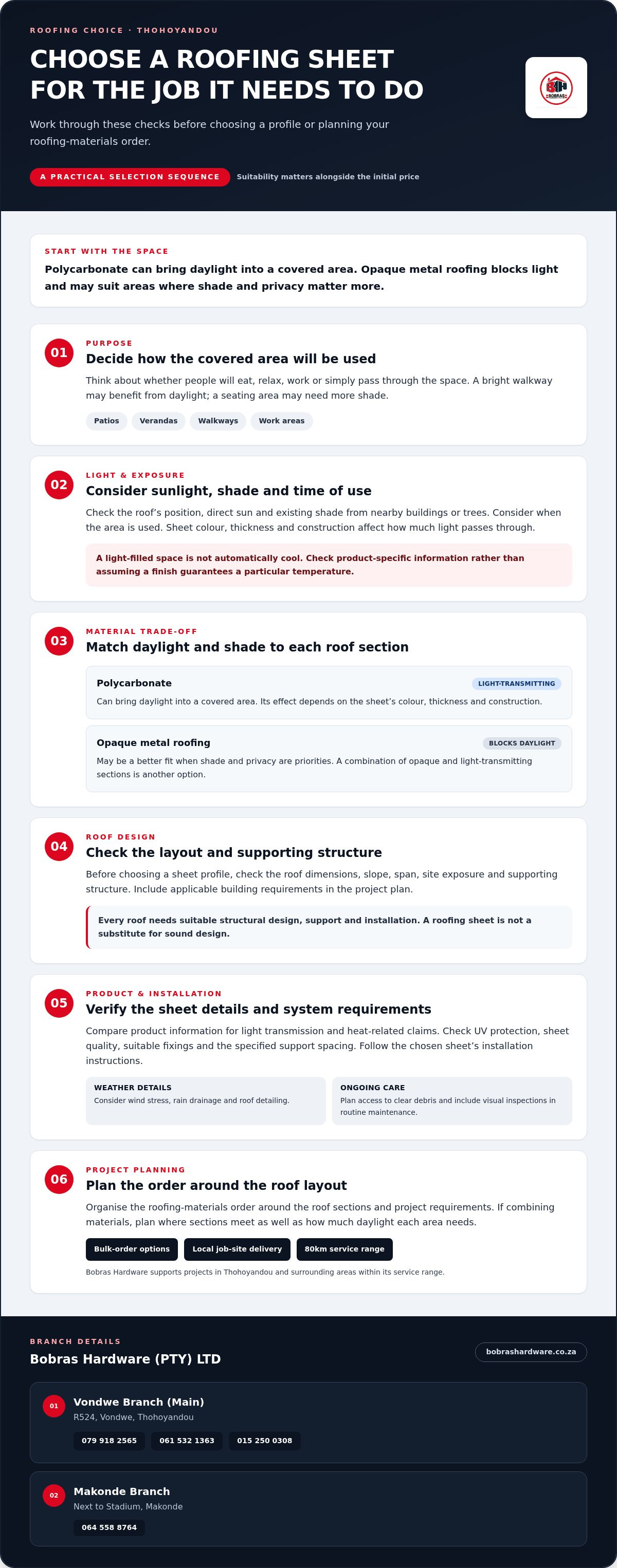
Start with the job the roof must do, then work through measurements, exposure and installation details. Use this checklist to organise your decision before preparing a roofing-materials order. It keeps the sheet choice tied to the actual roof, rather than appearance alone.
What Should You Measure and Decide First?
Start with the space beneath the roof. Decide whether daylight is useful, how much shade the area should provide and how people will use it. Then record the roof’s dimensions, slope, edges and supporting-member positions. Accurate measurements help you calculate sheet coverage and plan overlaps and cuts.
- Set the purpose. Note whether the roof covers a walkway, veranda, work area or another space, and decide how much daylight and shade it needs.
- Measure the roof. Record its length and width, slope, edges and any areas where sheets meet walls or other roof sections.
- Map the supports. Note the position and spacing of supporting members. Follow the selected sheet’s installation instructions for support requirements.
- Check site exposure. Consider direct sun, nearby trees and buildings, wind direction, rain run-off and places where debris may collect.
- Choose the profile. Match the intended sheet profile to the roof shape and supporting structure. Profile affects how sheets fit together, so don’t treat it as a colour or appearance decision alone.
How Can You Plan a Reliable Materials Order?
Group the order around the work sequence. List the roof sheets separately from compatible roofing materials, fixings and finishing items, then organise them by the stage when they’ll be needed. If the roof has sections using different materials, show each area separately on your measurements to keep quantities and installation details clear.
Allow for the cutting, overlaps, edge details and fixing method specified for the chosen sheet. Don’t estimate these using a different profile or product. Keep the product’s installation guidance with your order plan, and include applicable building requirements in your project preparation. In South Africa, roof work must meet relevant building requirements, including those for roof design and construction.
For larger jobs, a grouped materials list can help organise a bulk order and plan local job-site delivery. Bobras Hardware serves projects around Thohoyandou from its Vondwe and Makonde branches, with delivery to job sites within its 80km service range. A Cheap Affordable and trustable choice still needs to suit the measured roof and installation requirements.
Prepare your roofing-materials list and plan your project order with Bobras Hardware.
Plan Your Roofing Materials Order with Bobras Hardware
A well-organised roofing order starts with clear measurements and a practical sequence for the work. Once you’ve settled on the roof layout and material requirements, group the quantities and delivery details in one plan. This helps keep a home project manageable and gives contractors a clearer basis for coordinating larger jobs.
Bobras Hardware serves builders, contractors and homeowners through its Vondwe and Makonde branches. Bulk-order options support larger construction projects, and local job-site delivery serves Thohoyandou and surrounding areas within the 80km service range. Include these options in your planning, particularly when materials need to reach the site in line with the work programme.
How Can Local Supply Support a Roofing Project?
Bobras Hardware’s local branches supply projects around Thohoyandou and surrounding areas. Plan the order around the roofing stage, and consider how materials will be received and stored at the job site. For a larger build, grouping requirements into a bulk order can help organise roofing materials alongside the wider construction work. Local job-site delivery is another option within the 80km service range. Include delivery arrangements in your project plan rather than assuming a particular delivery time.
What Information Helps Keep an Order Organised?
Prepare a concise list before placing an order. Include roof measurements and planned quantities, and separate roofing items from materials needed for other stages. If the roof has different sections or profiles, label them clearly so you can track what each part of the project requires.
- Dimensions: Record the roof area, slope, edges and key measurements used to work out coverage.
- Quantities: List the required sheets and related roofing materials, fixings and finishing items according to the selected system’s guidance.
- Project location: Provide the job-site location so delivery can be planned within the local service area.
- Delivery arrangements: Note your preferred delivery plan and when materials are needed for the roofing stage.
- Work sequence: Separate immediate requirements from items needed later, so the order aligns with the build programme.
Keep measurements and product requirements together, and use the selected sheet’s installation guidance to plan overlaps, cutting and fixings. Don’t estimate those details from a different roofing profile. A clear list is useful whether you’re covering a small home area or organising materials for a larger trade project.
If you’re looking for “Cheap Affordable and trustable” roofing materials, start with a list that matches the roof and the work ahead. Explore Bobras Hardware’s building-materials range and plan your project order with a local supplier serving Thohoyandou and surrounding areas.
Turn Your Roofing Plan into the Next Step
Before committing to a roofing order, identify the result the project must deliver. It might be a brighter covered area, dependable shade or a consistent finish across the roof. Use that priority to guide decisions from planning through to purchasing.
A Cheap Affordable and trustable choice fits the project’s purpose and can be ordered with the right supporting materials. Keep your measurements, quantities and preferred order timing together. A clear brief makes it easier to coordinate the roofing stage with the rest of the build, whether you’re working on a home improvement or a larger construction job.
Bobras Hardware supports local projects with branches in Vondwe and Makonde, bulk-order options and job-site delivery around Thohoyandou and surrounding areas within its 80km service range. Take the next step with a clear plan and explore the building-materials range.
Plan your roofing materials order with Bobras Hardware. A well-prepared order is a practical start to moving your project forward.
Frequently Asked Questions
Is polycarbonate roofing suitable for a home?
Yes, polycarbonate can suit selected areas of a home, but it isn’t automatically right for every roof. For a home in Thohoyandou or the surrounding area, consider how the space is used at different times of day. Could daylight cause glare? Do you need privacy from neighbours, or more shade for furnishings and activities? Compare those needs with an opaque option before settling on the roof layout.
Can polycarbonate roofing sheets handle strong sun and rain?
Performance varies between sheets and roof installations. Consider strong sun, rain run-off and wind exposure at the specific site. Check the product information for UV protection and weather-related claims, then follow its installation guidance for supports and fixings. After severe weather, a visual check for loose fixings, debris or damage can help identify maintenance needs. Don’t assume one sheet’s service-life claim applies to another.
How do polycarbonate sheets compare with metal roofing sheets?
Polycarbonate can admit daylight, while opaque metal roofing blocks it and provides a continuous visual barrier. For example, a home project might use a light-transmitting section over one area and metal over another. The right combination depends on roof design, exposure, privacy needs and how each space is used. Compare profiles and installation requirements as well as materials. The lowest purchase price alone won’t show whether the choice suits the finished roof.
What should I check before choosing a polycarbonate roofing sheet?
Start with the roof plan and the purpose of the space beneath it. Check measurements, slope, supporting structure, exposure and the profile required by the roof design. Then review the selected sheet’s construction, compatible fixings and product-specific installation guidance. For a Cheap Affordable and trustable choice, compare documented product details with the job requirements rather than judging by appearance alone. Include applicable building requirements in your project planning.
Can polycarbonate sheets be used with metal roofing?
Yes, a project can use both where daylight is wanted in some sections and an opaque covering in others. Plan where the materials meet before ordering, including how the roof will drain and how the different profiles align. The support and fixing approach must suit each sheet. Don’t assume one fixing method works for both. Include the transition details in the roof plan so the materials form a coordinated assembly.
Do polycarbonate roofing sheets need special installation?
Installation must follow the requirements for the chosen sheet and roof system. Check how its profile, slope, support spacing and fixings work together, and plan edges and joins before work begins. Generic instructions may not match the product. For projects around Thohoyandou, include local site exposure and applicable South African building requirements in the preparation. Use product-specific information to guide installation rather than relying on assumptions about similar-looking sheets.


