

What if the roof covering you prefer doesn’t suit the structure beneath it? Choosing roofing materials is about more than appearance. The roof design, local conditions and the components that work together all affect what makes sense for your project.
It’s easy to focus on roof sheets or tiles and overlook the trusses, fasteners, underlay, flashings and gutters needed to complete the roof. Quantities also need to line up, so materials are ready for the work and avoidable delays are less likely.
This guide compares the main roofing material categories and explains the role of each part. You’ll find practical checks for comparing options against your roof design, site conditions and project requirements.
For projects in Thohoyandou and surrounding areas, Bobras Hardware supplies roofing and building materials from its Vondwe and Makonde branches. Bulk orders and local job-site delivery within 80 km can help you coordinate supplies for the wider build. The aim is to plan a complete roof system and a materials order that works together.
Key Takeaways
- Compare roofing materials by roof design, supporting structure, site exposure, finish and maintenance needs, not by appearance alone.
- Understand how the roof covering, structure, drainage and finishing details combine to form a complete roof system.
- Use roof measurements as a starting point, then account for pitch, overlaps, cuts and design details when planning quantities.
- Build an order list for the full roof, including supporting and finishing components alongside the covering.
- Plan bulk orders and job-site delivery alongside other building materials to keep project supplies coordinated.
Roofing Materials Explained: What Makes Up a Complete Roof?
A roof is a working system, not just the visible covering. Roofing materials include the products that cover the building, support that covering, direct rainwater away and finish vulnerable edges and junctions. Each component has a role. A mismatch can affect how the roof fits together, so plan the whole system when preparing a purchase.
This overview helps you organise a materials list. It isn’t a structural design or installation guide. The right structure and fixing method depend on the roof design and project requirements. Use the project plans and appropriate professional guidance to make those decisions.
Which materials form the roof covering and supporting structure?
Roof sheeting and roof tiles are two broad covering categories. Both create the outer surface, but each needs support suited to the roof design. Trusses form the main framework, whilst battens provide support points for the covering where the design calls for them. The required structure depends on the covering and project design, so don’t treat any one component as a stand-alone choice.
Why do gutters, flashings and underlays matter?
Water management and finishing details complete the system. Gutters collect rainwater at the roof edge and direct it through the planned drainage route. Flashings help manage junctions and penetrations, such as where roof surfaces meet walls or other features. An underlay may form part of the assembly where the design calls for one. Include these items in the plan rather than focusing only on the visible covering.
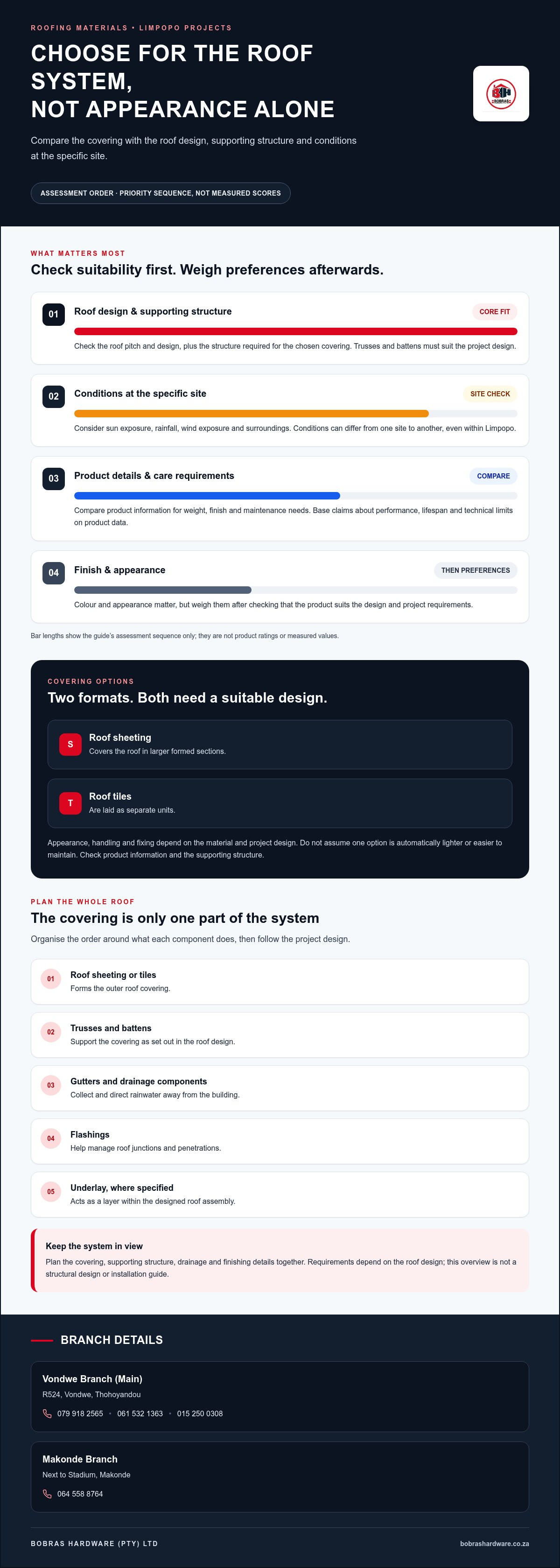
| Component | Main role |
|---|---|
| Roof sheeting or tiles | Forms the outer roof covering. |
| Trusses and battens | Support the covering as set out in the roof design. |
| Gutters and drainage components | Collect and direct rainwater away from the building. |
| Flashings | Help manage roof junctions and penetrations. |
| Underlay, where specified | Acts as a layer within the designed roof assembly. |
Use the table to organise components, not as a universal specification. A simple roof and one with several junctions or penetrations may need different details. Read the design as a whole, then plan the covering, supporting structure, drainage and finishing items together.
Compare Roofing Materials for Limpopo Projects
Roof sheeting and tiles can create different looks and suit different roof designs, but neither is right for every building. Compare the covering as part of the full roof system. Its weight, format and installation requirements must work with the supporting structure and design, not just the appearance you want.
How do roof sheeting and tiles differ as covering options?
Roof sheeting covers the roof in larger formed sections, whilst tiles are laid as separate units. Their appearance differs, and handling and fixing depend on the material and project design. Don’t assume one is automatically lighter or easier to maintain. Compare the product information for each option, including its weight, finish and care requirements.
Roof pitch matters too. The covering must suit the roof design, and the supporting structure must be appropriate for the chosen material. A change in covering can affect more than appearance, so consider it alongside the trusses, battens and other designed components. For guidance on metal roofing practice in Southern Africa, consult South African Metal Roofing Standards.
How should local site conditions shape a roofing choice?
Conditions can vary between sites in Limpopo, so assess the specific building rather than treating the province as one uniform environment. Consider:
- Sun exposure: Note how much direct sun reaches the roof and consider the selected finish as part of the design.
- Rainfall: Plan how water will move across the roof and into gutters and drainage.
- Wind exposure: Take the site’s exposure and the roof’s shape and position into account.
- Surroundings: Nearby buildings, trees and open ground can affect conditions around the roof.
These factors inform the choice, but they don’t replace the project design. Follow the design and applicable South African requirements, including the specified supporting structure and installation details. Base product-specific claims about lifespan, performance and technical limits on product data rather than assumptions.
A practical comparison weighs appearance, product weight, maintenance needs, site exposure and design suitability together. This gives you a clearer basis for choosing the covering and associated supplies. For a local source of roofing materials in Makonde, Bobras Hardware supplies roofing and building materials from its Makonde and Vondwe branches.
What Should You Check Before Choosing Roofing Materials?
A low unit price doesn’t show whether a product suits your roof. The covering must fit the design, supporting structure and site conditions. Compare roofing materials against the project requirements first, then weigh preferences such as colour and appearance. This helps you avoid basing the choice on a single feature.
Which project details affect material suitability?
Start with the roof plan and the building’s intended use. Details that may affect the covering, supports and finishing components include:
- Roof pitch: The angle of the roof influences which covering suits the design.
- Span: The distance across the structure informs support requirements.
- Layout: Roof shape, slopes and junctions affect how components fit together.
- Penetrations: Features such as vents or other openings need suitable finishing details.
- Intended use: The building’s purpose can affect project requirements and design choices.
These are planning prompts, not a structural specification. Don’t assume a covering can be substituted without considering its weight and the supports designed for it. Leave structural dimensions, engineering decisions and compliance questions to the project professional responsible for them.
How can you compare quality and practical upkeep?
Use product documentation to compare stated specifications and finish information. Check the details provided for each option rather than relying on broad claims about performance or lifespan. If a detail isn’t documented, don’t treat it as a proven advantage.
Think beyond installation day. Consider how the roof can be inspected, whether the finish will need regular cleaning and how practical it would be to access components for maintenance or replacement. Separate requirements from preferences too. Roof design, support and site exposure are project requirements; colour and visual style are preferences, unless the project brief says otherwise.
Before ordering, make sure the chosen covering and related components align with the design and applicable South African requirements. The project professional can address questions about structure and compliance, and the materials list can then reflect the selected system.
Takeaway: Suitability depends on the complete design, not one feature or the lowest unit price. Compare requirements first, then choose a finish that works for the project.
How to Plan Roofing Quantities and Your Materials Order
A coordinated order starts with the roof design, not a rough guess at roof area. Follow a clear sequence: confirm the design, prepare measurements, list the required items, review quantities against the plan, then organise delivery. This helps you spot omissions before materials are needed on site.
What information helps estimate roofing quantities?
Start with the approved roof plan and its dimensions. Roof area alone won’t give you a complete order quantity. Pitch, sheet or tile layout, overlaps, cuts and details such as junctions all affect what is required. Don’t apply a universal waste percentage or calculate an exact order without the project information. Final quantities should follow the design and relevant supplier specifications.
Use the plan to organise roofing materials by role. Include the covering, supporting structure, drainage, fixings and finishing components. This checklist can help:
- Covering: Roof sheeting or tiles, measured to the roof layout.
- Structure: Trusses and battens as specified in the design.
- Drainage: Gutters and associated components shown in the plan.
- Fixings: The items specified for the selected covering and supports.
- Finishing: Flashings and any underlay or other details called for by the design.
Record sizes and quantities beside each item, and note which plan or specification they came from. That makes the list easier to review and reduces the risk of ordering a covering without the components needed to complete the roof.
How can you coordinate bulk orders and job-site delivery?
Group the list by project stage. For example, separate the supporting structure from the covering, then list drainage and finishing components. This makes the order easier to check against the build sequence and helps coordinate roofing supplies with other building materials. Bobras Hardware serves contractors, builders and homeowners through its Vondwe and Makonde branches, with bulk ordering and local job-site delivery for Thohoyandou and surrounding areas within 80 km.
Plan delivery around site access and the order’s components rather than leaving arrangements until materials are needed. For broader purchasing planning, refer to the building materials buyer’s guide. Bring the project list together with the rest of your build supplies, then plan your roofing materials order with Bobras Hardware.
Source Roofing Materials for Your Project with Bobras Hardware
A roof order often sits alongside other building work. Coordinating roofing supplies with the wider materials list can make purchasing easier to organise and review. Bobras Hardware (PTY) LTD supplies roofing and building materials through its Vondwe and Makonde branches, serving contractors, builders and homeowners in Thohoyandou and surrounding areas.
What can local supply support on a roofing project?
Planning roofing and general building supplies together gives you a clearer view of what the project needs. Organise the roof covering, supporting components and drainage items alongside other materials required for the build. This helps you prepare a joined-up order rather than treating each part of the work as a separate purchase.
Bobras Hardware (PTY) LTD supports bulk orders and local job-site delivery within 80 km of its branches, serving Thohoyandou and surrounding areas. These options help contractors and homeowners plan supplies for a project, particularly when the roof order forms part of a larger build. Organise the materials list and delivery requirements around your project plan.
What are the next steps for a roofing materials order?
Before arranging an order, bring together the information that ties the materials to the roof design:
- Roof plan: Use the project plan as the basis for the order.
- Measurements: Prepare the dimensions needed to work out quantities.
- Component checklist: Include the covering, structure, drainage, fixings and finishing items specified for the roof.
- Project sequence: Group items by stage so the order is easier to review and coordinate with the wider build.
Determine suitable quantities from the project design and relevant product specifications. Avoid estimating from roof area alone, particularly where pitch, overlaps, cuts or design details affect the final list. A complete checklist gives you a practical starting point for bulk purchasing and delivery planning.
Bobras Hardware (PTY) LTD brings local supply points in Vondwe and Makonde together with building materials for projects across Thohoyandou and surrounding areas. Prepare your plan and component list, then explore roofing materials and building supplies at Bobras Hardware.
Plan Your Roof Order with Confidence
A roof works as a complete system. Choose the covering to suit the design and site, then account for its supporting structure, drainage and finishing components. For accurate quantities, start with the roof plan and measurements. Allow for pitch, overlaps, cuts and roof details rather than relying on roof area alone.
Organise the full list before placing an order. Group roofing materials with related building supplies, and plan quantities and delivery around the project. Bobras Hardware serves contractors, builders and homeowners through its Vondwe and Makonde branches. Bulk order options and local job-site delivery within 80 km can support project planning across Thohoyandou and surrounding areas.
With the design and component checklist ready, take the next step. Explore roofing materials and building supplies at Bobras Hardware, and get your project order moving with a clear plan.
Frequently Asked Questions
What roofing materials are used on a typical house?
A typical house roof uses a covering, supporting structure, drainage and finishing components. The covering may be roof sheeting or tiles, supported by trusses and battens according to the design. The full order may also include gutters, flashings, fixings and, where specified, an underlay. Components vary with the roof layout and chosen covering, so use the project plan to identify what the complete roof system requires.
Which roofing material is best for a house in Limpopo?
There isn’t one roofing material that suits every house in Limpopo. Compare options against the specific roof design, supporting structure, pitch and site exposure. Consider sun, rainfall and wind conditions at the building, as well as the finish and practical maintenance needs. Check product information for documented specifications, then follow the project design and applicable South African requirements. Local conditions differ, so choose for the site rather than the province alone.
How do I calculate how much roofing material I need?
Start with the approved roof plan and dimensions, not just the building’s footprint. Account for roof pitch, covering layout, overlaps, cuts and details such as junctions or openings. These affect the quantity needed, so a simple area estimate may not give you a complete order. Use the design and relevant product specifications to establish final quantities. Avoid applying a universal waste allowance or estimating exact amounts without the project information.
Are roof sheeting and roof tiles interchangeable?
No. Roof sheeting and tiles are different covering types, and they may require different support arrangements, fixing methods and finishing details. Their weight and suitability must align with the roof design and structure. Replacing one type with another isn’t simply a change of appearance; it may affect the supporting system and material quantities. Use the project design to guide the choice, and have structural implications addressed by the professional responsible for the design.
Do roofing materials need to be selected before the roof structure is built?
Yes, choose the covering as part of the roof design before the supporting structure is specified and built. The selected covering and roof layout affect the structure and related components. Changing the material later can affect the design, quantities and finishing details. Share the chosen covering with the project professional responsible for the roof design so the structure and materials list are coordinated before construction begins.
What should I include in a roofing materials order?
Include the roof covering, the supporting structure shown in the design, drainage components such as gutters, required fixings and finishing details such as flashings. Add an underlay only where the design specifies one. Check the plan for junctions and penetrations that may need extra components. Record each item and its quantity against the design or product specifications, so the order covers the roof system rather than just its visible surface.
Can roofing materials be delivered to a building site near Thohoyandou?
Yes. Bobras Hardware provides local job-site delivery in Thohoyandou and surrounding areas within 80 km. Contractors, builders and homeowners can plan delivery alongside roofing and other building materials, with bulk order options available for construction projects. Prepare the roof plan, measurements and component checklist before organising the order. This gives you a clear materials list to work from as you coordinate supplies for the site.


