
The most durable roofing sheet on paper may be the wrong choice for your site. The best roofing sheets for South African weather depend on where you’re building, how the roof is designed and how much upkeep you can manage. Coastal salt air, inland heat and UV exposure, heavy rain and strong winds all place different demands on a roof.
It’s easy to get stuck choosing between corrugated and IBR profiles, or weighing metal against fibre-cement and translucent sheets without knowing what matters most. The right choice isn’t just about the sheet. Roof pitch, fixings, coating and exposure also affect performance and maintenance.
This practical comparison explains the strengths and limitations of common roofing sheet materials and profiles in South African conditions. You’ll find what to consider for heat, rain, wind and corrosion, how roof design affects your options, and which details to check before buying. The aim is to help you match the roof to the site and avoid taking on more upkeep than expected.
Key Takeaways
- The best roofing sheets for South African weather depend on site exposure, roof design and maintenance expectations.
- Compare steel, fibre-cement and translucent sheets by their practical strengths and limitations, not by material alone.
- Consider how heat, rainwater run-off, wind and corrosion could affect the roof before choosing a profile.
- Use a checklist to match the sheet to your building, then confirm the specification and required quantities.
- Bobras Hardware supplies roofing materials from its Vondwe and Makonde branches, with local delivery and bulk-order options for projects around Thohoyandou.
What Makes Roofing Sheets Suitable for South African Weather?
A suitable roofing sheet fits the conditions at the building, the roof’s shape and the level of maintenance the owner can manage. Start with exposure, not just appearance or material. A house inland, for example, may face prolonged sun and large temperature changes, while a building near the coast may also be exposed to humid, salt-laden air.
South African weather varies across regions and can change over short distances. Rainfall, wind and heat depend on local conditions, while terrain and nearby shelter can affect how exposed a roof is. No sheet material is automatically the best choice for every building. The profile, roof pitch, support structure, fixings and installation all influence how the finished roof performs.
Weather suitability comes down to matching the sheet, roof design and installation to the building’s actual exposure and maintenance needs. That’s the practical basis for comparing the best roofing sheets for South African weather. A material’s general strengths matter, but they don’t replace a site-specific decision.
How heat, rain and wind affect a roof
Prolonged sunshine can heat roof surfaces and increase indoor heat, particularly where the roof build-up has limited ventilation or insulation. Sheets can expand as they warm and contract as they cool. The roof design and installation need to allow for this movement rather than placing undue stress on the sheets or fasteners.
During heavy rain, water must drain cleanly off the roof. Pitch, profile, laps and correctly placed fixings all help limit water entry. A shallow roof or poorly detailed joint can cause problems if the selected sheet system isn’t suited to the design. Wind adds another demand: exposed roofs need a suitable fixing approach and structural design to resist uplift. The right details depend on the building and site, not on profile alone.
Why site location changes the comparison
Inland sites may call for closer attention to sun exposure, roof temperature and thermal movement. Coastal sites may need added consideration of moisture and salt in the air, which can affect exposed metal surfaces and maintenance needs. These are factors to compare, not guarantees that one material will always outperform another. The product specification and how the roof is built still matter.
Exposure can differ between two properties in the same town. A building on an open rise may face stronger wind than one sheltered by nearby structures; a site close to the sea may experience different conditions from one further inland. Before comparing sheets, note the building’s position, roof orientation, nearby shelter and signs of local exposure. Use reliable local climate information for location-specific claims, and check technical requirements against the project details. This gives the comparison a sound starting point without relying on broad regional labels alone.
How Common Roofing Sheets Compare in South Africa
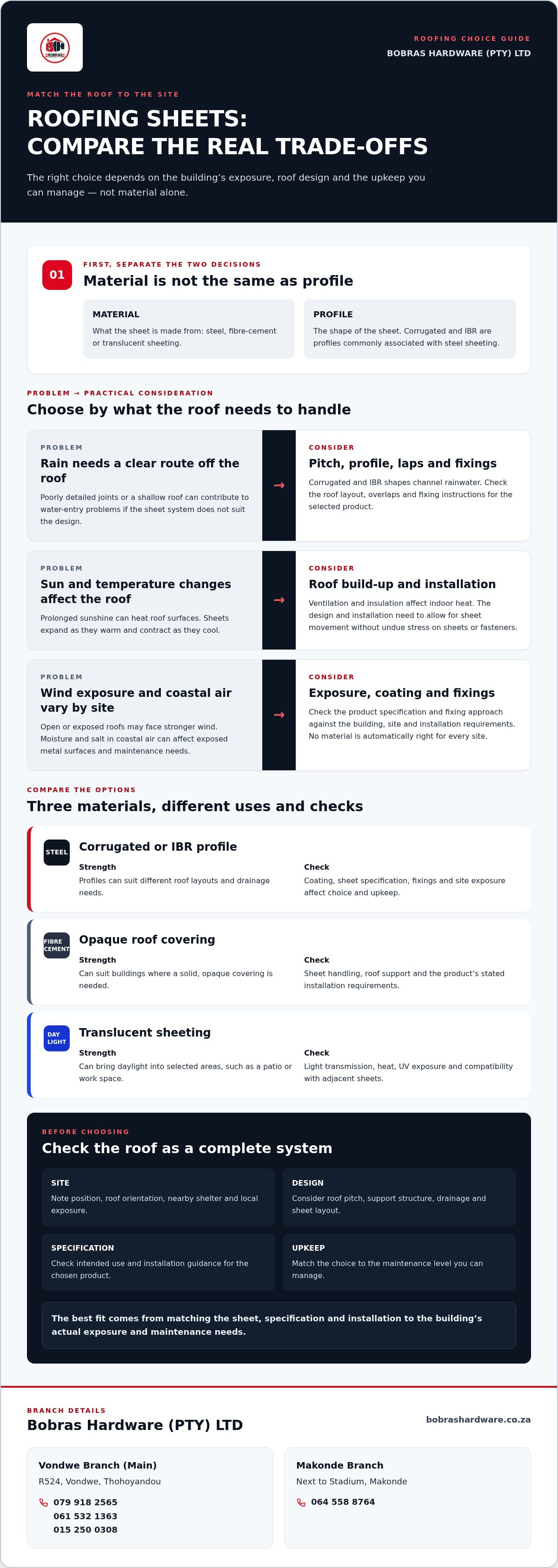
Separate two decisions: material describes what the sheet is made from, while profile describes its shape. Corrugated and IBR are profiles commonly associated with steel sheeting. Fibre-cement and translucent sheets are material options with different uses. Compare each against the roof design and site conditions rather than treating one option as best for every building.
| Option | Practical strengths | Points to consider |
|---|---|---|
| Steel sheeting | Available in profiles such as corrugated and IBR, which can suit different roof layouts and drainage needs. | Coating, sheet specification, fixings and exposure affect the choice and upkeep. |
| Fibre-cement sheeting | Can suit buildings where a solid, opaque roof covering is needed. | Consider sheet handling, roof support and the product’s stated installation requirements. |
| Translucent sheeting | Can bring daylight into selected areas, such as a patio or work space. | Light transmission, heat, UV exposure and compatibility with adjacent sheets matter. |
Roof suitability depends on the material, its specification and the quality of installation. A broad material label isn’t enough. Check the sheet details, including its intended use and installation guidance, against the project. Specifications can vary between products, so don’t assume sheets of the same material have identical requirements.
Steel roofing sheets: corrugated and IBR profiles
Corrugated sheets have repeating rounded waves; IBR sheets have a more angular, trapezoidal profile. Both shapes channel rainwater, but roof pitch, sheet overlaps and layout affect drainage. The profile also influences where fixings go and how sheets meet at edges and ridges. Match these details to the roof plan, then check the specification and fixing instructions for the chosen product.
Fibre-cement and translucent roofing sheets
Fibre-cement provides an opaque covering, while translucent sheets let daylight through where it’s useful. That makes translucent panels a possible choice for part of a roof, rather than a default for the whole building. Consider where daylight is needed and how the panel will meet the main roof sheets. Review the care and installation guidance for each product, as requirements and upkeep vary.
The best roofing sheets for South African weather depend on how these trade-offs fit the site and roof. For a building project around Thohoyandou, source roofing materials through Bobras Hardware (PTY) LTD, with branches in Vondwe and Makonde and local delivery options.
Which Roofing Sheet Trade-Offs Matter Most in Your Climate?
Compare the conditions your roof must handle, not just the sheet’s material or weight. Heat, rain, wind, corrosion and upkeep interact with the roof’s pitch, structure and position. A thicker or heavier sheet isn’t automatically the best choice for every site. The supporting structure and fixing design must suit the selected sheet and local exposure.
| Factor | What to weigh up | Trade-off to consider |
|---|---|---|
| Heat | Sheet colour, roof design, insulation and ventilation | A sheet alone won’t determine indoor comfort. |
| Rain | Pitch, overlaps, drainage paths and installation | A suitable sheet can still leak if water details are poorly handled. |
| Wind | Site exposure, roof layout and fixing method | Sheet weight alone doesn’t establish wind suitability. |
| Corrosion | Coastal or otherwise exposed conditions, plus product specification | Exposure raises a maintenance consideration, not a guarantee of corrosion. |
| Upkeep | Product care guidance and access for inspection | Material choice affects maintenance needs, but installation and exposure matter too. |
Heat, ventilation and roof comfort
The roof sheet is only one part of the building’s heat control. Insulation, ceiling construction and ventilation also affect how much warmth moves into occupied rooms. Colour can influence how much sunlight a roof absorbs, while roof shape and airflow affect how heat behaves below it. Consider these elements together, especially for rooms used throughout the day.
For example, choosing a lighter-coloured sheet may be one part of a heat-management plan, but it won’t replace insulation or suitable ventilation. A well-insulated roof can still need careful design to manage heat build-up. Avoid judging comfort from the sheet material alone.
Rain, wind and corrosion exposure
Wet-weather performance depends on the whole roof system. Pitch helps direct water towards the eaves, while overlaps, valleys and drainage paths need to carry it away without obstruction. Fixings must suit the sheet and roof structure. In exposed or coastal locations, consider corrosion risk and follow the product’s care guidance rather than assuming every metal sheet will behave the same way.
Before selecting a sheet, review the manufacturer’s specification and installation instructions for the project. Check that the roof design, fixings and supporting structure are suitable, and confirm which building requirements or standards apply. These checks turn a general material comparison into a practical decision for your site. The best roofing sheets for South African weather balance these demands rather than relying on one feature, such as thickness, to do every job.
How to Choose Roofing Sheets for Your Building: A Practical Checklist
A clear selection process turns weather concerns into practical buying decisions. Work through these steps before ordering, and keep the roof plan and product documentation together. For broader planning around local projects, the Building Materials in Thohoyandou buyer’s guide offers related context.
Assess the roof and local exposure first
Begin with the building, not a product name. Record the roof shape and pitch, approximate dimensions, supporting structure and drainage plan. Note whether the site is open to wind, receives strong sun or heavy rain, or is exposed to salt-laden air. These conditions help frame the comparison; design-specific choices should follow the project plans and professional advice.
- Identify the building’s use. A home, workshop, store room or covered outdoor area may have different needs for daylight, indoor comfort and routine access for inspection.
- Review the roof design. Note the roof shape, pitch, edges, valleys and drainage routes. Check how the proposed profile will fit the layout and manage water at joins.
- Map the site exposure. Record likely sun, rain, wind and coastal conditions. Local exposure can vary, so consider shelter, nearby structures and the building’s position rather than relying on a broad regional label.
- Set upkeep expectations. Consider how the roof can be inspected and maintained, and whether the product’s care guidance suits the time and access available.
Check sheet specifications before ordering
Compare the documented details for each option, including material, profile, thickness, coating and fixing method. Don’t treat similar-looking sheets as interchangeable. Manufacturer instructions explain how a particular product is intended to be installed, while the roof plan provides the dimensions and layout the order must meet.
- Match dimensions and coverage. Confirm sheet lengths, effective cover width and total quantities from the roof layout. Allow for the specified side and end laps, roof edges and cuts.
- Check fixings and support. The fixing method must suit both the sheet and the roof structure. Review the product guidance and have project-specific structural requirements assessed by the relevant professional.
- Verify requirements and quantities. Use measured roof areas and the planned layout to calculate quantities, accounting for overlaps and cutting. Check applicable standards and technical requirements for the project before finalising the order.
This sequence keeps the decision grounded in the building rather than a single headline feature. It helps narrow down the best roofing sheets for South African weather for your project, while leaving detailed design decisions with the appropriate project professional. For roofing materials to suit your building plan, source roofing materials through Bobras Hardware (PTY) LTD.
Source Roofing Materials for Your South African Building Project
Once you’ve assessed site exposure and settled on a suitable material and profile, check the project documents. Confirm the product specification, required quantities and installation details before arranging an order. This helps ensure the roofing materials match the roof plan, not just the weather conditions you expect.
Prepare a clear roofing materials list
Keep the list focused on the roof covering and the items needed to fit it. Separate measured quantities from estimates so it’s clear which figures are ready to order and which still need checking.
- Sheet material and profile: Record the selected material and shape, such as a corrugated or IBR profile where applicable.
- Dimensions and quantities: Note sheet lengths, effective cover width and total quantities from the roof layout.
- Fixings and finishing items: List the fixing type and relevant roof components, such as ridge or edge pieces, where required by the design.
- Measurement status: Mark confirmed measurements separately from estimates, including allowances for laps and cutting.
Use the product documentation and roof plan to check that the listed items work together. If dimensions or technical details are still estimates, resolve them as part of the project rather than treating them as final order quantities.
Get local support for your roofing project
For builders, contractors and homeowners in Thohoyandou and surrounding areas within an 80km range, local supply can help organise roofing and other building materials around project requirements. Bobras Hardware (PTY) LTD serves the area through its Vondwe and Makonde branches, with local delivery and bulk-order options for building projects. A clear materials list gives the order a practical starting point without assuming a particular sheet or specification is right for every roof.
The best roofing sheets for South African weather are selected for the site, roof design and maintenance needs, then matched to the product specification and measured quantities. Keep those details together as you prepare to source materials. Browse building materials for your project through Bobras Hardware (PTY) LTD.
Put Your Roofing Choice Into Action
A roof decision becomes easier to manage once the product choice is written into a clear project brief. Keep the selected material and profile, roof measurements, required fixings and any unresolved technical details in one place. That gives everyone working on the build a shared reference before materials are ordered or work begins.
The best roofing sheets for South African weather aren’t chosen by comparing one feature in isolation. Match the specification to the building and its exposure, then use measured quantities and installation guidance to plan the next step. If a structural or technical detail remains uncertain, resolve it for the project before finalising the order.
Bobras Hardware supplies roofing and building materials for projects around Thohoyandou and surrounding areas within an 80km range, with branches in Vondwe and Makonde, plus bulk-order options and local delivery. Prepare your materials list, then browse building materials for your project. A well-planned roof starts with clear information and the right materials for the job.
Frequently Asked Questions
Can roofing sheets be installed over an existing roof?
Sometimes, but assess the existing roof before adding another layer. Check for leaks, rot, damaged supports and trapped moisture, as a new covering can hide problems rather than fix them. Older roofs may contain asbestos, so don’t cut, drill or disturb suspect sheets. Have the roof assessed and follow the appropriate safe-handling requirements before planning any work over or around it.
Are metal roofing sheets noisy when it rains?
They can be, particularly if rain hits a bare sheet with little separation from the room below. The sound heard indoors also depends on the ceiling, insulation and roof construction, so the sheet alone doesn’t determine noise levels. For a bedroom or work area, consider the complete roof build-up at the design stage. Ask the project professional to account for sound control alongside heat management and ventilation.
Do roofing sheets need to be painted?
Not always. Whether painting is needed depends on the sheet’s finish, condition and manufacturer’s care instructions. A factory-coated sheet may have different maintenance needs from an uncoated or previously painted surface. Before applying paint, check that it’s suitable for the roofing material and prepare the surface as directed. Painting over dirt, rust or a failing coating can leave the underlying issue unresolved.
Can roofing sheets rust in South Africa?
Yes, metal sheets can rust if the protective coating is damaged or conditions expose the metal, including around cut edges, scratches and fixings. Coastal air can make corrosion a more important consideration, though it doesn’t mean every metal roof will rust. Inspect the roof periodically, paying attention to joints and damaged areas, and use maintenance products that suit the sheet’s specified coating.
What roof pitch is needed for roofing sheets?
There isn’t one pitch that suits every sheet. The minimum permitted pitch depends on the product, profile, sheet length, laps and roof layout. A low-pitched roof can be more sensitive to water entry if the sheet system isn’t designed for it. Check the manufacturer’s installation instructions and have the project’s design requirements assessed before ordering. Don’t rely on a general figure for a specific roof.
Can translucent roofing sheets be used with metal sheets?
Yes, they can be used together in some roof designs, for example to bring daylight into a selected section of a covered area. Choose panels made for the intended roofing use and check that their profile, cover width and fixing details suit the adjoining metal sheets. Follow the product guidance for overlaps and movement, and position translucent panels where incoming light will be useful rather than disruptive.


