
The longest tool list won’t make a job easier; the right tool for the task will. If you’re comparing building tools Thohoyandou for a home repair or a busy site, start by matching the tool to the material, working conditions and frequency of use. A tool suited to occasional DIY may not be practical for regular site work.
Before you buy, identify the jobs ahead and the finish they require. Then compare tool types, handling and care requirements. This guide covers practical ways to match tools to the work, weigh hand tools against power tools and plan purchases for a home or site project.
Bobras Hardware supplies tools alongside building materials and other project essentials. Its Vondwe and Makonde branches serve Thohoyandou and surrounding areas, with bulk order options and local job-site delivery for larger projects. Use the steps below to plan your tools and related supplies around the work you need to complete.
Key Takeaways
- Choose tools according to the task, material and expected frequency of use.
- Compare hand tools and power tools by the control, effort and finish the job calls for.
- Check handling, durability, maintenance and suitability before deciding.
- Plan your building tools Thohoyandou purchase around the next project stage, separating immediate needs from later requirements.
- Group tools with related project supplies to keep a home or site purchase organised.
Finding the Right Building Tools for Work in Thohoyandou
Choosing building tools Thohoyandou for a repair or construction job can be tricky. A tool may look useful but still be unsuitable for the material, work area or expected workload. Start by listing the tasks, then narrow down the tool type and features that will help complete them.
Plan materials alongside equipment. For a wider view of the supplies involved, refer to Building Materials in Thohoyandou: A Practical Buyer’s Guide. Matching tools and materials to the same stage of work makes it easier to see what you need now and what can wait.
Start with the job, material and working conditions
Write down what needs doing before comparing tools. Fixing a loose fitting, cutting timber and preparing a metal surface call for different approaches. Masonry work may require tools suited to hard, abrasive surfaces; timber work often involves careful measuring, cutting or fastening; and metal tasks may involve shaping or surface preparation. Let the material and required finish guide your choice.
Account for the work area, too. A confined space may limit the size of a tool or how far it can move. Uneven surfaces, awkward access and limited room to position materials can also affect control. If you’re comparing tool categories, this list of building tools and equipment offers a broad overview.
When does a basic tool suit the work?
For occasional home maintenance, a straightforward tool may be enough to tighten a fitting, measure a space or carry out a minor repair. There’s little benefit in choosing equipment designed for demanding, repeated work if the task is simple and infrequent. On the other hand, a basic option may not suit work that will put regular demands on the tool.
Repeated site use changes what matters. Pay closer attention to handling, durability and suitability when a tool will be used throughout a project. Consider how often you’ll use it, which material it will work on and whether its design suits the site conditions. A tool that feels manageable for a short task at home may be less practical over longer or more frequent use.
Choose for the work ahead: occasional tasks may suit a basic tool, whilst repeated site use calls for closer attention to durability and handling. This keeps the purchase tied to your actual needs, rather than features you may rarely use.
Building Tool Types: Match Hand and Power Tools to the Task
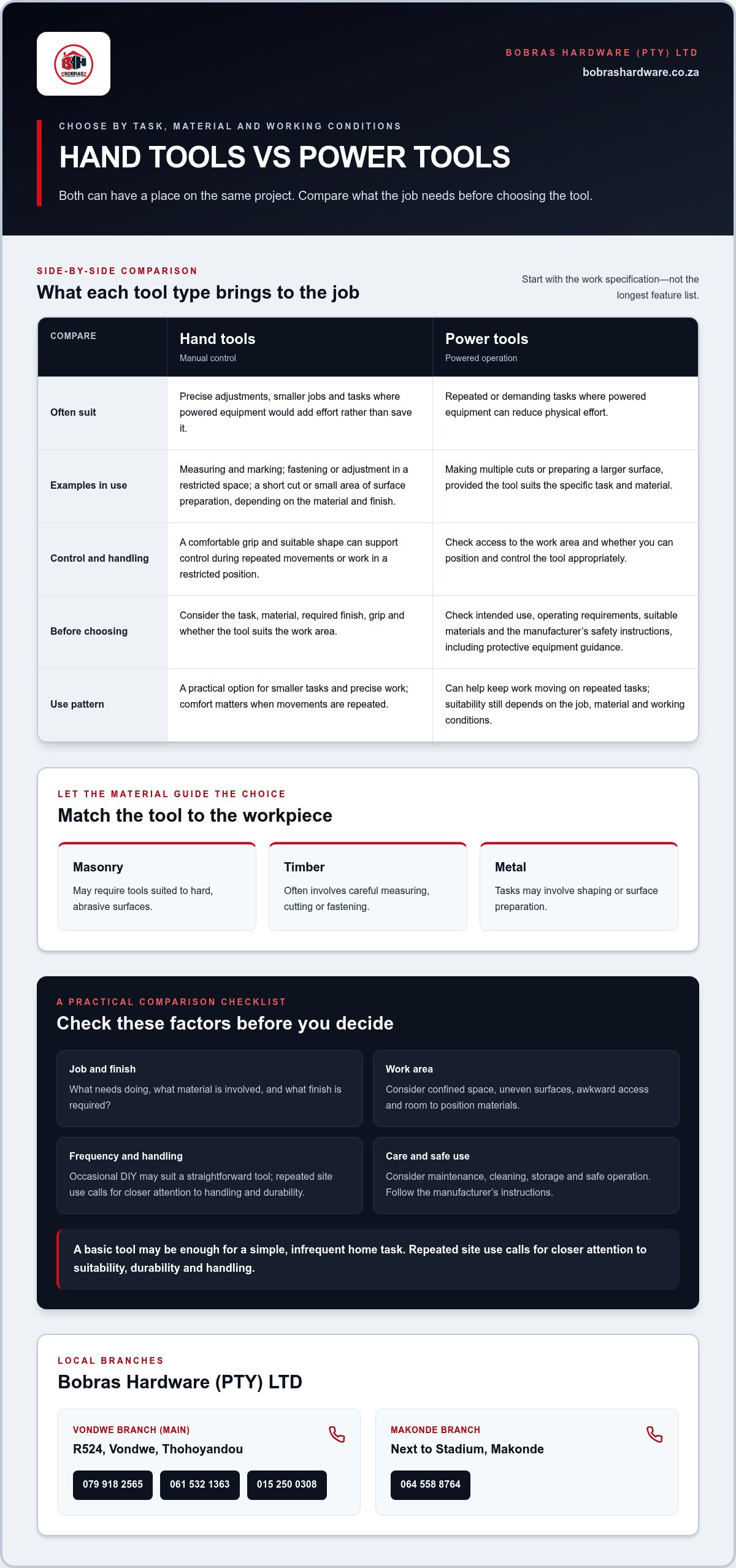
Hand tools and power tools can perform similar kinds of work, but they differ in control, effort and pace. The right choice depends on the material, work specification and amount of work involved. For building tools Thohoyandou buyers, the aim is to select equipment that fits the job, not simply the option with the longest feature list.
When are hand tools the practical choice?
Hand tools suit precise adjustments, smaller jobs and tasks where powered equipment would add effort rather than save it. Measuring and marking tools help set out work, while hand tools for fastening or adjustment can offer close control in a restricted space. For a short cut or a small area of surface preparation, a manual tool may also be practical, depending on the material and finish required.
Comfort matters when a task involves repeated movements. A sturdy, comfortable grip can make a tool easier to control over a longer period. Check whether its shape and size suit the work area and whether you can hold it steadily without awkward positioning.
When should a building project use power tools?
Powered tools can reduce physical effort on repeated or demanding tasks, such as making multiple cuts or preparing a larger surface. They may also help keep work moving, but the tool must suit the specific material and task. A tool designed for cutting, for example, is not automatically suitable for every cut or material.
Compare options by intended use, handling and operating requirements. Consider access to the work area and whether you can position and control the tool appropriately. Follow the manufacturer’s operating and safety instructions, including guidance on suitable materials and protective equipment.
Be clear about the result the work requires before choosing. The tool type should match the job specification, while the material, scale of the task and working conditions all inform the decision. Hand and power tools can both have a place on the same project, each for the tasks they handle best.
Bobras Hardware supplies tools alongside building materials and other construction essentials. Explore tools and project supplies from Bobras Hardware as you plan the equipment and materials for the work ahead.
How to Compare Building Tools Before You Buy
A useful comparison starts with the work, not the feature list. For building tools Thohoyandou buyers need, follow a simple sequence: define the job, choose a tool type, compare practical features, then plan how often and where you’ll use it. This keeps the decision focused on the task and helps you disregard features that won’t make a difference on site.
- Define the job: Note the task, material and finish required.
- Select the tool type: Decide whether a hand tool or powered option suits the work.
- Compare practical features: Assess handling, construction, maintenance and material suitability.
- Plan its use: Consider frequency, storage and safe operation.
Which tool features matter for your project?
Start with how the tool feels in your hand. A comfortable grip and balanced shape can help with control, especially during repeated movements or work in a restricted position. Check its construction against the demands you expect, and consider whether it will be straightforward to clean, care for and store if you’ll use it regularly.
Match the tool’s intended use to the material and work specification. A feature is useful only if it helps you complete the task properly. A good tool comparison begins with the job, then weighs the features that help get it done. This approach works for occasional home maintenance as well as ongoing site work.
How should you plan for safe, repeated use?
Before starting work, consider what protective equipment the task calls for and have it ready. Follow the manufacturer’s operating and safety instructions, along with the site’s safety procedures. These steps apply to hand tools as well as powered equipment, particularly when work is repeated or conditions change.
Include inspection and storage in your routine. Look for wear, damage or loose parts before use, and stop using a tool if its condition raises a safety concern. Clean and store it as directed after the task, somewhere it won’t be damaged or create a hazard. Regular care helps you spot problems before the next job.
Plan beyond the first use. Consider who will handle the tool, how often it will be used and what care it needs between tasks. This helps ensure the features you choose will be useful throughout the work, not just attractive at the point of purchase.
Planning a Building Tool Purchase in Thohoyandou
A short purchase plan can keep the next stage of work on track. List the tasks, group tools with the materials they’ll be used alongside, then separate immediate needs from items for later stages. This helps you focus on what’s required now without overlooking supplies needed as the project progresses.
How can you organise tools for a home or site project?
Sort your list by work stage and material. Keep tools and supplies for preparation together, for example, and list what’s needed for fitting or finishing separately. Note which tasks call for measuring, fastening, cutting or surface preparation, and record quantities where relevant. This gives you a clearer purchasing list and helps prevent unrelated equipment from creeping in.
Group tools with the materials needed at each stage, such as building materials, paint and coatings, plumbing supplies or roofing materials. Check what you already have before adding items. Plan how tools and supplies will be stored and transported between the supplier, home or job site. Bulky purchases and site access can affect whether collection or delivery best suits your plan.
- Needed first: Tools and materials required to begin the next stage.
- Needed later: Items for following work, kept separate to avoid premature or unnecessary purchases.
- Plan for handling: Storage and transport arrangements for the tools and supplies.
What should Thohoyandou buyers consider for local supply?
For building tools Thohoyandou projects, Bobras Hardware serves the area through its Vondwe and Makonde branches. The company supplies tools alongside building materials and other construction essentials, helping you organise related requirements in one project list. Bulk order options and local job-site delivery support planning for larger projects. Bobras serves Thohoyandou and surrounding areas within an 80 km range.
Use your work-stage list to plan what needs to reach the site first and what can be arranged for a later phase. Prioritising requirements helps avoid unnecessary transport and keeps the team focused on the work at hand. A home repair may need only a short list; for a larger site, grouping quantities by stage can make supply planning easier to manage.
Ready to organise your next project’s tools and supplies? Plan your project with Bobras Hardware.
Source Building Tools and Project Supplies from Bobras Hardware
Choosing the right tool is only part of preparing for a job. You also need the materials to go with it, from building supplies for construction work to paint and coatings for finishing, plumbing supplies for installation tasks or roofing materials for roof work. Bobras Hardware supplies tools alongside these construction essentials, serving homeowners, builders and contractors with project requirements.
For anyone sourcing building tools Thohoyandou, planning tools and related supplies together can simplify the purchase. Organise requirements by work stage, then group tools with the materials they’ll be used alongside. You’ll get a clearer view of what the project needs and avoid adding items that aren’t relevant to the planned work.
A local supply partner for projects of different sizes
Bobras Hardware’s Vondwe and Makonde branches serve Thohoyandou and surrounding areas within an 80 km range. Homeowners can plan purchases for a repair or improvement, while builders and contractors can arrange bulk orders for larger requirements. Base the order plan on the work ahead, the quantities needed and when each project stage is due.
Local job-site delivery can support projects where transporting supplies to the work area is part of the plan. For larger orders, organising delivery alongside the materials and tools helps bring supply planning together. A clear list of quantities and priorities makes it easier to plan what the site needs first and what can be arranged for a later stage.
Keep the purchase practical. Separate tools from materials on your list, note the quantities required and identify which supplies are needed first. This works for a small home job or a larger site where several types of work may be under way. It also gives you a straightforward basis for planning a retail purchase or bulk order.
Take the next step with Bobras Hardware
Before arranging supplies, write down the tasks, materials and quantities for the next stage. Include the tools needed to complete that work, then set aside requirements for later phases. With a practical list in hand, plan your project supplies with Bobras Hardware through its Vondwe and Makonde branches.
Find tools and building supplies at Bobras Hardware.
Plan Your Next Build with the Right Tools
The right tool choice starts with the work: match the tool to the task and material, then consider handling, durability and frequency of use. A clear purchase list can separate immediate needs from tools and supplies for later stages.
For building tools Thohoyandou, Bobras Hardware supplies tools alongside construction essentials. Its Vondwe and Makonde branches serve Thohoyandou and surrounding areas, with bulk order options and local job-site delivery to support project supply planning.
Prepare your task list and quantities, then browse tools and building supplies at Bobras Hardware. Plan your next project with the tools and supplies it needs.
Frequently Asked Questions
What building tools do I need to start a construction project?
The tools you need depend on the first tasks, materials and work specification. List what must be measured, marked, fastened, cut or prepared, then select suitable tools for those jobs. Include what’s needed for the next stage and set aside later requirements. Consider how the tools will be stored and transported. For structural or specialist work, follow the project specification and relevant safety procedures.
Where can I buy building tools in Thohoyandou?
You can source building tools Thohoyandou through Bobras Hardware, which supplies tools alongside building materials and other construction essentials. Its Vondwe and Makonde branches serve Thohoyandou and surrounding areas within an 80 km range. Homeowners, builders and contractors can plan tools alongside related supplies such as paint, plumbing or roofing materials, according to the work ahead.
How do I choose between hand tools and power tools?
Choose according to the task, material, required control and amount of work. Hand tools can suit small jobs, precise adjustments and work in confined spaces. Power tools can reduce effort on repeated or demanding tasks, provided the tool is intended for the material and job. Consider how comfortably you can handle it, then follow the manufacturer’s operating and safety instructions and any site safety procedures.
Are building tools available for bulk orders in Thohoyandou?
Bobras Hardware offers bulk order options for project and trade purchases, including tools and hardware. To plan an order, list the tools needed, quantities and project stages. Group them with related building supplies where useful. This gives you a clearer basis for organising larger job requirements across the work schedule.
Can building tools be delivered to a job site near Thohoyandou?
Bobras Hardware provides local job-site delivery for building supplies across Thohoyandou and surrounding areas within an 80 km range. The business supplies tools alongside construction essentials, so include the tools and quantities required in your project supply plan. Its Vondwe and Makonde branches serve the local area, helping builders, contractors and homeowners organise supplies for their work site.
How much do building tools cost in Thohoyandou?
Building tool costs depend on the type of tool, its intended use and the quantities required. Make a shortlist based on the tasks and materials involved, then distinguish essential tools from items for later stages. For a project or trade purchase, organising quantities together can also help you plan a bulk order without buying equipment unrelated to the work.


