

What if you know which materials you need but aren’t sure when to order them? A building materials checklist for new home construction should follow the build sequence, from site preparation through to finishes. This makes it easier to spot omissions before work starts and plan deliveries around the programme.
It’s understandable to feel unsure about what to order, when to order it and how much you’ll need. Some quantities come from the plans or bill of quantities, while specifications must match the project documents. Getting those details straight helps your building team plan each stage with fewer surprises.
This guide takes you through the main material groups for a new home, including foundations, walls, roofing, plumbing, electrical work, doors, windows and finishes. You’ll see which details to check against your plans and how to organise staged purchasing for a build in Thohoyandou and surrounding areas. Bobras Hardware supplies materials for multiple build stages, with bulk orders and local site delivery to help you plan around your schedule.
Key Takeaways
- Use a building materials checklist for new home builds to group items by construction stage, from site preparation to finishes.
- Use the plans and bill of quantities to check project-specific material specifications and quantities before placing orders.
- Keep roofing components, doors and windows as separate checklist items so sizes, openings and required fixings aren’t missed.
- Group plumbing and electrical supplies by system and installation stage to help your building team prepare for upcoming work.
- Schedule orders and deliveries around the build programme, then record each delivery to help limit site clutter and material damage.
Building materials checklist for a new home: start with the plans
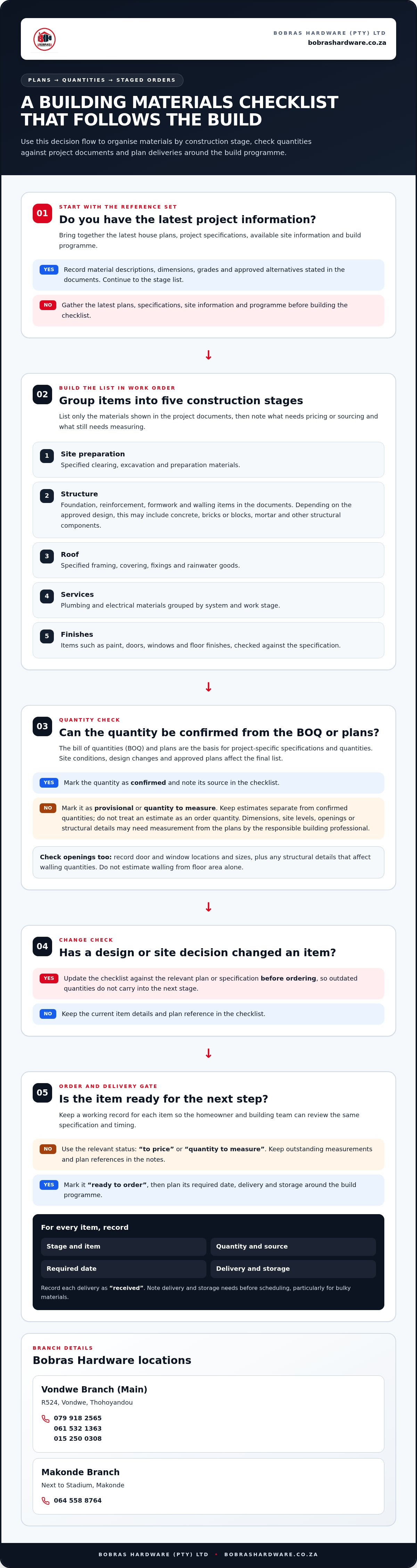
A useful building materials checklist for new home construction follows the work sequence, rather than reading like an unstructured shopping list. Start with five groups: site preparation, structure, roof, services and finishes. Under each group, record the materials shown in the project documents, then note what needs pricing or sourcing and what still needs measuring.
The plans and bill of quantities (BOQ) are the basis for project-specific specifications and quantities. Site conditions, design changes and the approved plans all affect the final list, so don’t use standard quantities as a substitute for project measurements. For context on how the stages fit together, see this overview of the building construction process.
- Site preparation: list specified clearing, excavation and preparation materials.
- Structure: record foundation, reinforcement, formwork and walling items shown in the documents.
- Roof: note the specified framing, covering, fixings and rainwater goods.
- Services: group plumbing and electrical materials by system and work stage.
- Finishes: record items such as paint, doors, windows and floor finishes against the specification.
Some items can be identified and priced from their descriptions and specifications. Quantities that depend on dimensions, site levels, openings or structural details need to come from the BOQ or be measured from the plans by the responsible building professional. Keep confirmed quantities separate from estimates. Mark measured quantities as confirmed and estimates as provisional, so an early budget allowance isn’t mistaken for an order quantity.
What to gather before making a building materials list
Bring together the latest house plans, project specifications, available site information and build programme. Record the material descriptions, dimensions, grades and any approved alternatives stated in those documents. Then create a working table with columns for stage, item, quantity, required date, delivery and storage. Add a notes column for the plan reference or any outstanding measurement.
This simple record connects each item to its purpose and timing. It also helps the homeowner and building team discuss the same specification when reviewing orders. For local context on choosing and sourcing supplies, read the Thohoyandou building materials buyer’s guide.
How to keep the checklist useful as work progresses
Assign one person to update order status and record changes against the relevant plan or specification. Use clear labels such as “to price”, “quantity to measure”, “ready to order” and “received”. When a design or site decision changes an item, update the record before ordering. This helps prevent outdated quantities carrying into the next stage.
Review the list alongside the build programme. Mark delivery and storage needs before scheduling each order, particularly for bulky materials. Bobras Hardware supplies building materials and offers bulk orders and local site delivery to support planning across the construction sequence in Thohoyandou and surrounding areas.
Foundation and structural materials: check the build’s core requirements
Foundations and structural work depend on exact project details. Add excavation and foundation materials only where they appear in the plans or bill of quantities. Depending on the approved design, the list may include concrete, reinforcement, formwork, bricks or blocks, mortar and other structural components. Don’t use a generic list to decide what a particular home needs.
Dimensions and quantities depend on the house plans, engineering details and site conditions. Keep measurements and calculations tied to the relevant project documents, and mark anything still awaiting measurement as an estimate. This makes the building materials checklist for new home construction more useful for ordering and helps prevent assumptions from becoming purchase quantities. For another stage-by-stage reference, see Realty Times’ Construction Supplies Checklist.
Foundation checklist: concrete, reinforcement and formwork
Record the concrete type, reinforcement details and formwork requirements exactly as specified. Keep each item on its own line, with its quantity source and planned use noted. The cement calculation guide for foundations and slabs can help you understand the information involved in estimating cement requirements. Use project measurements and calculations for the actual order.
Match delivery timing to the sequence of excavation, preparation and scheduled concrete work. Materials arriving too early may take up valuable site space; arriving after the work is ready can interrupt the programme. Record the required date and any storage needs beside each order.
Walling and structural items to record
List the specified bricks or blocks, mortar and structural components shown in the approved design. Before ordering walling materials, record the locations and sizes of door and window openings, along with any structural details that affect the work. These details influence quantities, so don’t estimate from floor area alone. The guide to estimating bricks for a house offers further help with planning the calculation.
- Walling: note the specified brick or block type and the quantity source.
- Mortar: record the materials and requirements stated in the project documents.
- Structural components: include only items shown in the plans or engineering details.
- Openings: check sizes and positions against the latest plans before ordering.
Keep confirmed measurements separate from estimates, and update the list if approved project details change. For building materials across the construction stages, explore Bobras Hardware’s building materials.
Roofing, doors and windows: plan the home’s outer envelope
The roof and openings work together to protect the building from the weather. Treat them as connected parts of the home’s outer envelope, but list and order each material separately. A useful building materials checklist for new home construction should capture the specified components, sizes and finishes, not just broad categories such as “roofing” or “windows”.
Compare options against the project documents. Check that the material suits the specified design and exposure, consider its maintenance needs, and confirm that its dimensions and finish fit the approved plans. Don’t swap a profile, frame material or finish based on appearance alone. A change can affect how components fit together and may need approval before ordering.
Roofing materials to include in the checklist
Break the roof into separate lines so each part can be checked against the specification and scheduled for delivery. Record the roof covering, supporting structure, fasteners, flashings and gutters or other specified rainwater goods. Note the required profiles, dimensions and finishes from the project documents rather than relying on a general description.
- Roof covering: specified material, profile and finish.
- Supporting structure: framing details and associated components shown in the plans.
- Fixings and flashings: items and details required by the roof specification.
- Rainwater goods: specified gutters and related components.
Plan safe, dry storage before delivery. Keep materials protected and place them where they won’t obstruct site work. Coordinate arrival with the build programme so they’re on site before roofing begins.
Doors and windows: sizes, frames and installation items
Use the latest plans to check every opening before ordering. Record its location and dimensions, then match each door or window to the specified frame material and product selection. Include frames and associated fittings where the chosen specification requires them. Keeping measurements and selections together makes it easier to spot a mismatch before materials reach the site.
- Opening: location and size from the current plans.
- Selection: specified door or window type, frame material and finish.
- Associated items: fittings or other components required by the specification.
Update the checklist if approved plans change. A clear record helps the homeowner and building team align selections with the design and coordinate delivery with the relevant stage of work.
Plumbing, electrical and finishing materials: avoid late-stage gaps
Services and finishes have their own ordering details. Group items by system and work stage, then use the project specification to record the required materials and quantities. Keep the checklist current as selections are finalised, so the building team can see what’s needed next and what still depends on a documented decision.
Plan service routes and finish choices together before walls are closed. Pipe locations, electrical layouts, ceiling details and finish selections can affect the sequence of work. Coordinating them early helps the team identify the materials needed for each installation stage, rather than discovering a gap after surfaces are covered.
Plumbing and electrical items to track
Keep drainage, water supply and fixture items in separate checklist groups. Record the specified pipes, fittings and valves for each system, then list sanitaryware by room or installation stage. For electrical work, take cables, fittings and accessories from the approved layout and project specification. This is a materials record, not wiring guidance.
- Drainage: specified pipes and fittings, grouped by system.
- Water supply: pipes, fittings and valves from the project documents.
- Fixtures: sanitaryware and associated items by room or installation stage.
- Electrical: cables, fittings and accessories listed in the specification.
Schedule deliveries to match the relevant installation stage. This keeps materials from taking up site space before they’re needed and makes it easier to check each delivery against the order.
Finishes, paint and tools for the final stages
Once finish selections are documented, list plaster, ceiling materials, paint, coatings, flooring and other specified finishes as separate items. Record the selected descriptions and quantities against the project documents. Keep tools and consumables in a separate list from permanent building materials, so temporary work needs aren’t confused with items that form part of the home.
Update the checklist when documented finish choices change. A revised paint selection or flooring specification may affect the related order, so note the change and date against the relevant item. This gives the homeowner and building team a clear record of what has been selected and what remains to be ordered.
Bobras Hardware supplies plumbing, electrical and finishing materials for home builds. Plan your plumbing, electrical and finishing supplies around the project schedule.
Turn the checklist into staged orders and planned site deliveries
A complete list is only useful if orders arrive in step with the work. Turn your building materials checklist for new home construction into a working schedule that connects each item to a confirmed specification, quantity, required date and delivery point. Staged ordering can help reduce site clutter, limit materials’ exposure to damage and avoid storing items before they’re needed.
A simple order and delivery workflow
Use the same checks for each order, whether it covers foundation materials, roofing or finishing supplies:
- Confirm specifications. Match each item to the current plans and project documents. Check that any approved changes are reflected in the list.
- Check quantities. Use confirmed measurements and calculations. Keep estimates clearly marked until they’re verified.
- Schedule orders. Compare required dates with the build programme. Group bulk requirements by construction stage, rather than ordering everything at once.
- Arrange delivery. Note the intended site access point and where each delivery should be placed. Plan storage with the materials’ protection and the site’s available space in mind.
- Record receipt. Check delivered items against the order record. Note shortages or visible damage promptly, and update the checklist.
This sequence gives homeowners and building teams a shared record. It also makes it easier to see what’s ordered, what has arrived and what still needs action. For projects in Thohoyandou and surrounding areas within an 80 km range, Bobras Hardware’s Vondwe and Makonde branches offer bulk orders and local site delivery to support delivery planning.
Keep the materials list current through the build
Plans and site decisions can change as work progresses. If an approved design or site change affects a quantity or specification, update the relevant checklist line before placing or adjusting an order. Keep receipts, delivery notes and product specifications together, and record changes against the affected item. This creates a useful reference for the homeowner and building team as the next stages approach.
Review the list alongside the build programme before each new stage. Confirm what’s ready to order, what is due for delivery and what needs secure storage. A clear record helps keep materials aligned with the work, without filling the site with supplies too early.
Plan your building materials with Bobras Hardware and organise orders around your build programme.
Put your build materials plan into action
A dependable building materials checklist for new home construction starts with the plans and bill of quantities, then follows the build stage by stage. Check specifications and measured quantities before ordering. Schedule deliveries around the work, and keep the checklist current as approved selections or site requirements change.
From foundations and roofing to plumbing, electrical supplies, doors, windows and paint, a clear materials record helps you and your building team stay organised. Bobras Hardware serves Thohoyandou and surrounding areas within an 80 km range through its Vondwe and Makonde branches, with bulk order options and local site delivery for construction materials.
Plan your building materials with Bobras Hardware and organise your next orders around the build programme. With a practical list and staged deliveries in place, you can move into each phase ready for the work ahead.
Frequently Asked Questions
What building materials do I need to build a new home?
A new home usually needs materials for site preparation, foundations, structure, roofing, services and finishes. Depending on the approved design, the list may include concrete, reinforcement, formwork, bricks or blocks, mortar, roof framing and covering, fixings, plumbing and electrical supplies, doors, windows, plaster, ceilings, paint and flooring. Use the project plans and bill of quantities to confirm which items apply and their specifications. The final list varies by build.
How do I make a building materials checklist for a new home?
Build your building materials checklist for new home construction from the latest plans, specifications, bill of quantities and build programme. Organise items by stage, then record each description, specified dimensions, quantity source, required date, delivery point and storage needs. Mark quantities as confirmed or estimated, and assign one person to update order status and note approved changes. This helps homeowners and building teams track what’s needed without treating estimates as order quantities.
How many bricks do I need to build a new house?
The number depends on the wall lengths and heights, wall thickness, brick or block size, and the size and location of openings such as doors and windows. Use the project plans and bill of quantities, or have the wall areas measured from the approved design. Don’t rely on a rule-of-thumb count for ordering. For a Thohoyandou-area build, use the same project-specific measurements and confirm the specified walling materials before arranging supply.
How much cement is needed for a new home foundation?
There isn’t one cement quantity that fits every foundation. The amount depends on the foundation dimensions, concrete specification and project calculations, which are affected by the approved design and site conditions. Check the bill of quantities and engineering details for the required concrete and cement information. Don’t calculate an order from the house floor area alone. Keep any early estimate separate from the quantity confirmed for purchasing.
Should I order all building materials before construction starts?
No. Plan orders around the build programme and arrange delivery in stages, so materials arrive close to when the work needs them. Ordering everything upfront can take up site space and leave items exposed to damage before use. Confirm specifications and quantities first, then group orders by construction stage. Some items may need earlier planning, so record required dates against the programme and arrange storage for anything delivered ahead of the work.
Can I use the same building materials checklist for every new home?
You can reuse the checklist structure, but don’t assume the same materials or quantities apply to every home. Design, site conditions, dimensions, specified materials and finish choices affect the final list. Start each project with its own approved plans and bill of quantities, then update the checklist when documented changes are made. For builds in Thohoyandou and surrounding areas, Bobras Hardware supplies materials across stages, with bulk orders and local site delivery.


